Visitor Center
Located at the entrance, this facility provides an overview of the site and hosts the main exhibition regarding the city's division.
View the introductory film before walking the outdoor grounds.
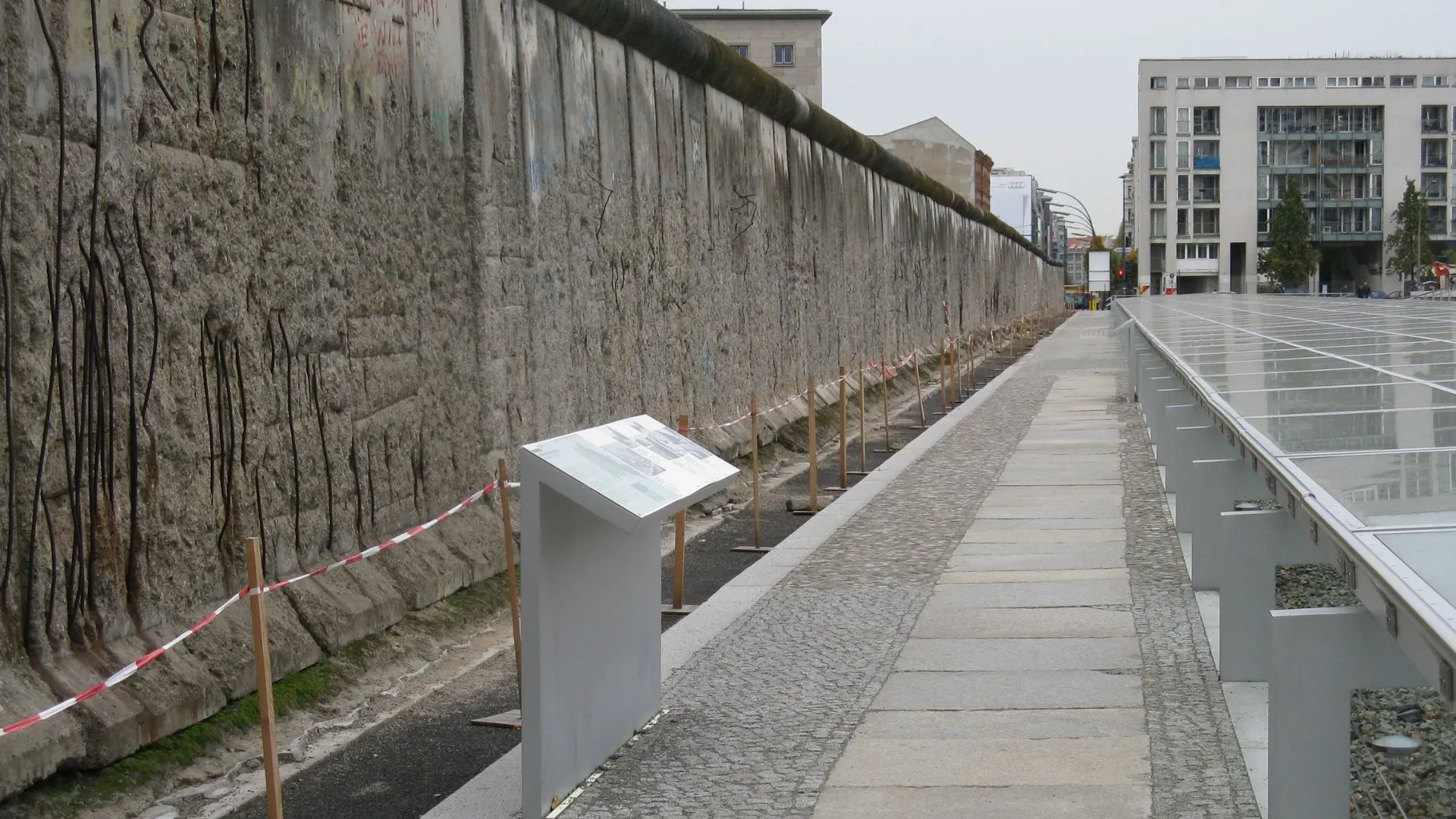
The Berlin Wall no longer divides the city, but substantial sections remain as memorials and open-air galleries. This guide maps the most significant surviving segments and explains what makes each site worth visiting.
Quick answer
The most significant place where to see the wall in Berlin is the Berlin Wall Memorial at Bernauer Straße 111, which preserves the only intact section of the border fortifications including watchtower, death strip, and both inner and outer walls. The site is open daily from 08:00 to 22:00 with free admission. Other major remnants include the 1.3-kilometer East Side Gallery along Mühlenstraße and fragments at Potsdamer Platz and Niederkirchnerstraße.
Only 1.5 kilometers of the Berlin Wall's original 155-kilometer length survived demolition after 1989. What remains exists in scattered fragments across the city, each telling a different part of the barrier's story. The challenge for visitors is understanding which sections preserve authentic Cold War-era fortifications and which represent later reconstructions or artistic interventions. The Berlin Wall Memorial on Bernauer Straße stands as the most complete historical document. This 1.4-kilometer stretch preserves not just concrete panels but the full border apparatus: signal fencing, patrol road, anti-vehicle trenches, and the gravel-filled death strip where escapees were shot. The outdoor grounds remain accessible around the clock, while the documentation center and observation tower operate during posted hours. Church ruins embedded in the memorial mark where the border sliced through neighborhoods, separating families overnight in August 1961. The East Side Gallery represents a different legacy. International artists transformed this riverside section into the world's longest open-air gallery in 1990, painting 105 murals on the eastern face. Visitors see Dmitri Vrubel's fraternal kiss between Brezhnev and Honecker, Birgit Kinder's Trabant breaking through concrete. The artwork commemorates the wall's fall rather than its function as a border fortification. Additional remnants survive at Potsdamer Platz, where a short segment illustrates how the barrier bisected the city center, and along Niederkirchnerstraße beside the Topography of Terror documentation center, where 200 meters of original wall stands against the former Gestapo headquarters. Understanding where to see the wall in Berlin requires recognizing that preservation came late. Berliners initially attacked the barrier with hammers and crowbars, driven by decades of rage. Municipal authorities demolished most sections during reunification construction booms. The memorial sites that exist today emerged from civic campaigns to protect fragments before they vanished entirely. Each surviving section offers different insights: the memorial teaches border mechanics and escape attempts, the gallery celebrates liberation, the scattered fragments mark geography. Arrive at Bernauer Straße early to walk the full outdoor trail before indoor exhibitions close at 22:00, then visit the East Side Gallery for late afternoon light on the murals.
“Only 1.5 kilometers of the Berlin Wall's original 155-kilometer length survived demolition after 1989.”
The Berlin Wall Memorial at Bernauer Straße maintains a consistent schedule throughout the week to provide access to the site. It is open daily from morning until evening.
The Berlin Wall Memorial is a public site managed by the foundation, and all exhibitions and outdoor grounds are accessible without an entry fee. Visitors do not require tickets for general admission to these historical areas.
Verdict: An adult pays 0 EUR to visit the memorial, as there are no ticketed tiers or entry costs.
The Berlin Wall Memorial is located at Bernauer Straße 111, 13355 Berlin, Germany. The most direct approach is via public transit, which deposits you directly in the vicinity of the main site.
U8 to Bernauer Straße
M10 to Gedenkstätte Berliner Mauer
247 to Gedenkstätte Berliner Mauer
Plan to arrive within the best arrival window of 08:00–17:45. Arrive early to explore the outdoor grounds and the observation tower before indoor areas close.
The Berlin Wall Memorial at Bernauer Straße offers a comprehensive look at the border fortifications through preserved structures and dedicated exhibition spaces. Visitors can examine the division of the city by moving between outdoor memorial grounds and indoor information centers.
Located at the entrance, this facility provides an overview of the site and hosts the main exhibition regarding the city's division.
View the introductory film before walking the outdoor grounds.
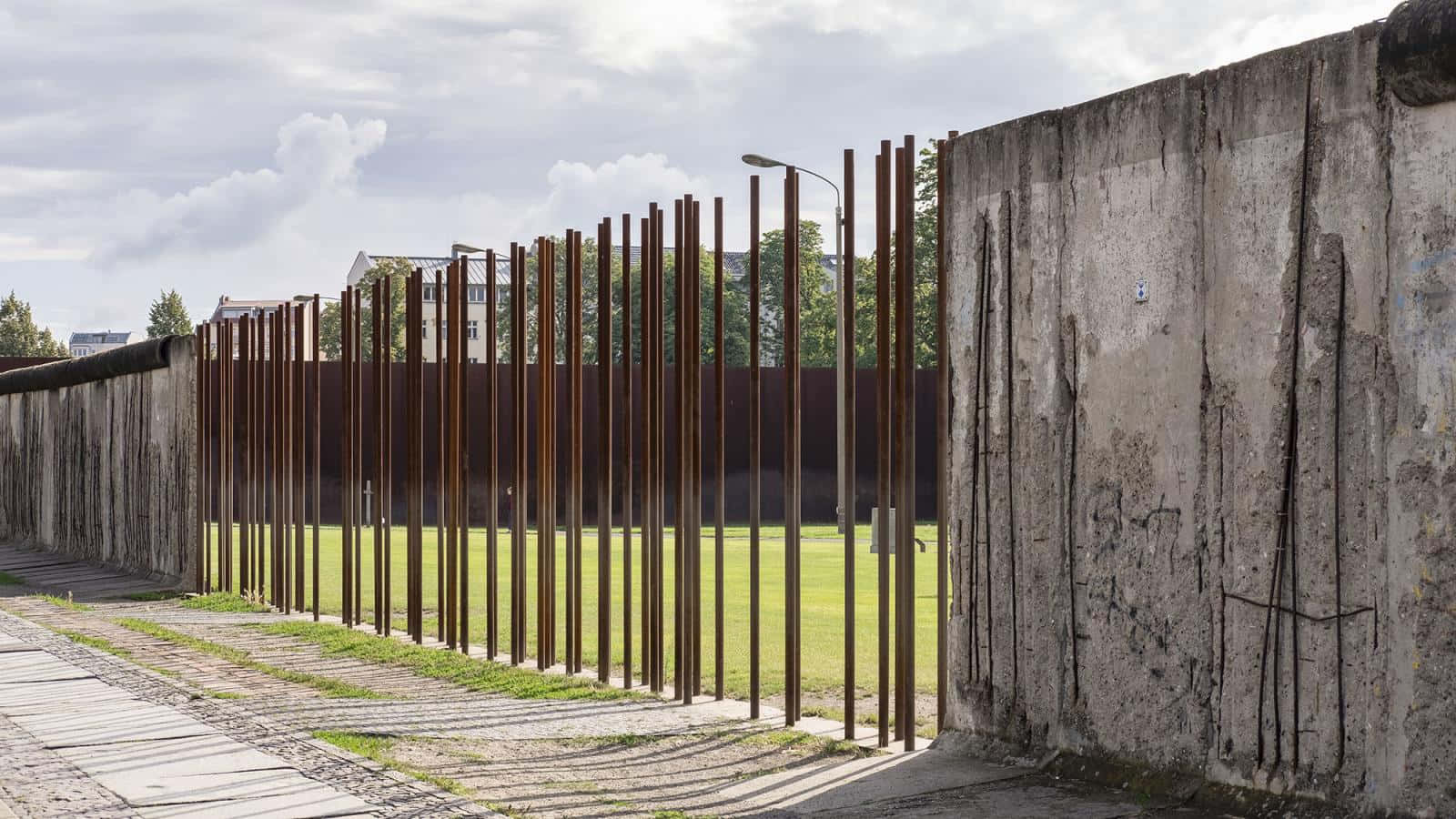
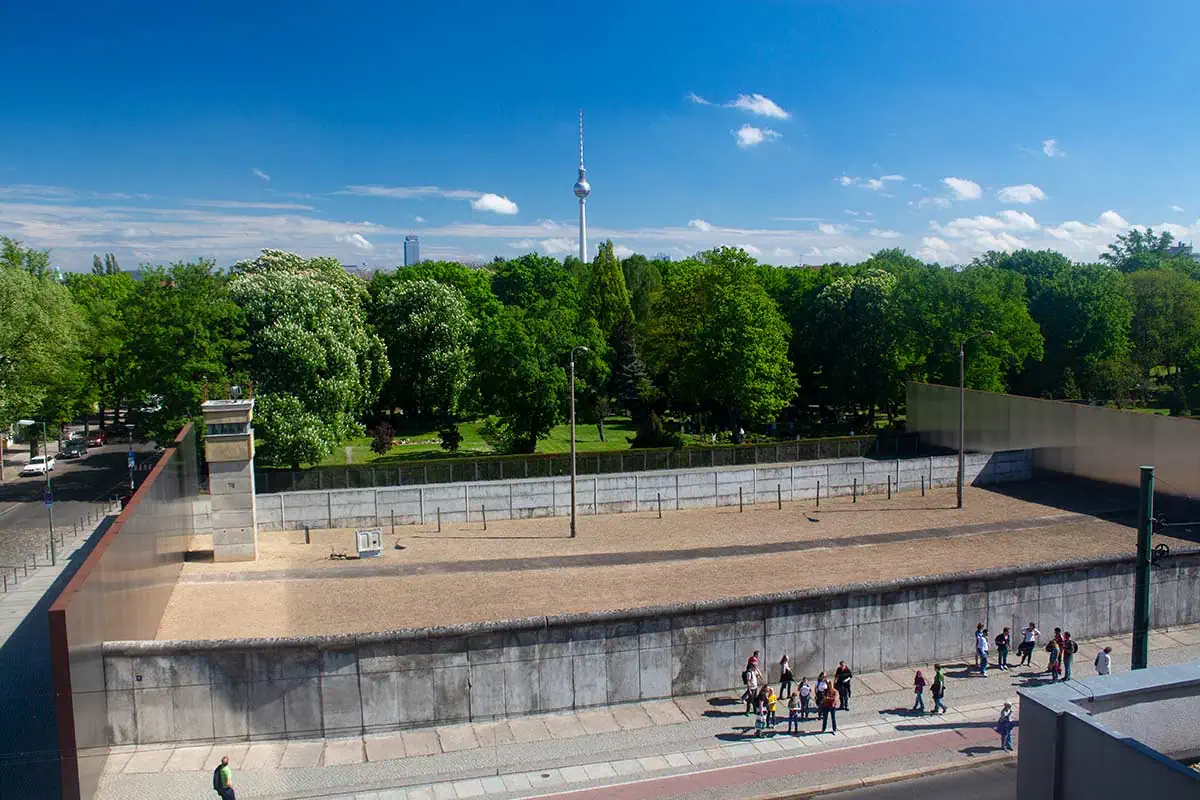
This preserved section of the border strip features the last remaining segment of the wall with its original depth and control elements.
Walk the path to see the death strip layout.
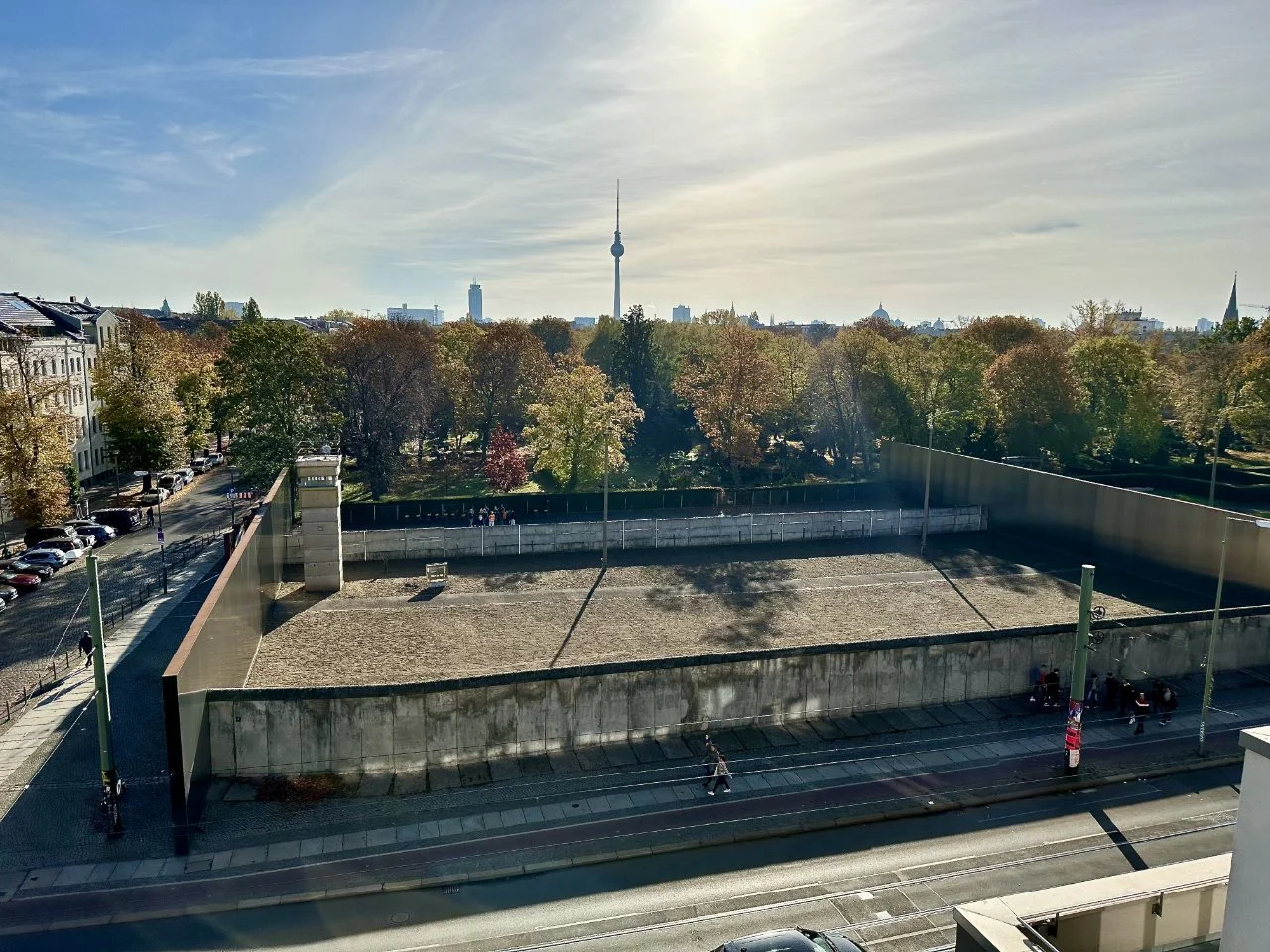
This structure provides an elevated vantage point overlooking the preserved border strip and the surrounding city landscape.
Go to the top level for a clear aerial view.
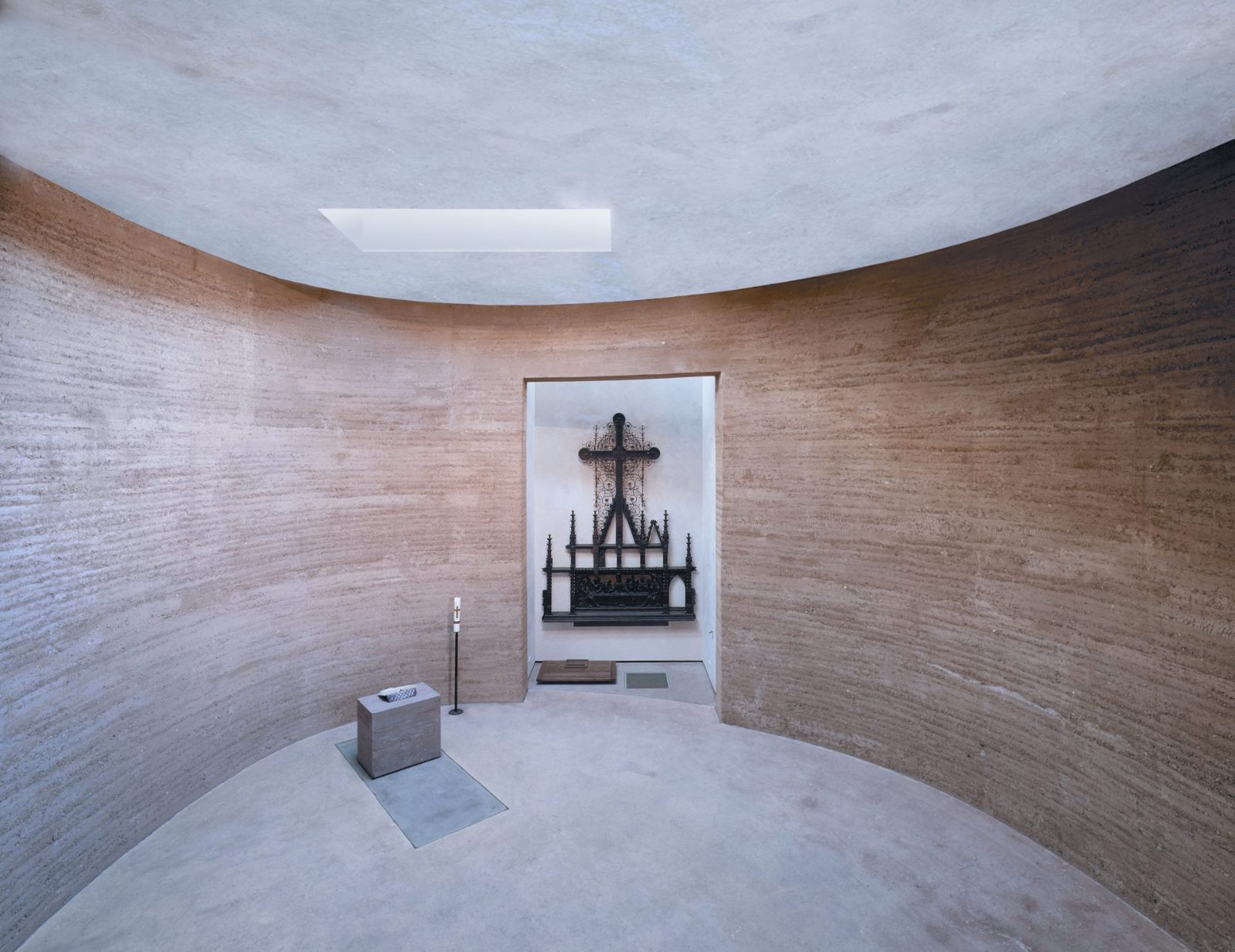
Situated on the site of the former church destroyed in the border zone, this structure honors the memory of those who lived and died here.
Observe the rammed earth walls and light patterns.
On the night of August 13, 1961, the German Democratic Republic sealed the border between East and West Berlin with barbed wire and concrete barriers, dividing families and neighborhoods across 155 kilometers. Walter Ulbricht's government justified the fortifications as an "anti-fascist protective rampart," though the primary aim was to halt the exodus of skilled workers fleeing to the West. By 1965, engineers had replaced the improvised barriers with a sophisticated double-wall system: an inner concrete segment, a death strip patrolled by guards and illuminated by floodlights, and an outer barrier reinforced with watchtowers and anti-vehicle trenches. Peter Fechter bled to death in the no-man's-land on August 17, 1962, after border guards shot him during an escape attempt. His death became a symbol of the Wall's human cost, recorded in the 140 documented fatalities between 1961 and 1989. The regime continually refined the barrier, adding a fourth-generation wall in 1975 composed of L-shaped concrete segments weighing 2.6 tons each, engineered to resist ramming and climbing. On November 9, 1989, Günter Schabowski's fumbled announcement of new travel regulations triggered spontaneous crowds at the checkpoints. Border guards, overwhelmed and lacking clear orders, opened the gates shortly before midnight. Berliners from both sides dismantled sections with hammers and chisels through the following months. Today, visitors exploring where to see the wall in Berlin encounter the 1.4-kilometer East Side Gallery along Mühlenstraße, the preserved stretch at Bernauer Straße with its documentation center and observation tower, and the Topography of Terror site where foundation remnants remain visible beneath steel markers. These fragments anchor the city's memory of division.
The German Democratic Republic seals the border between East and West Berlin with barbed wire, initiating construction of the Berlin Wall.
Peter Fechter becomes one of the first documented victims, shot by border guards during an escape attempt and left to die in the death strip.
Engineers replace improvised barriers with a double-wall system featuring watchtowers, floodlights, and a patrolled no-man's-land.
The regime installs fourth-generation L-shaped concrete segments weighing 2.6 tons each, designed to resist escape attempts.
Günter Schabowski's announcement of new travel regulations prompts crowds to overwhelm checkpoints; guards open the gates before midnight.
Berliners dismantle most sections; the city preserves key stretches including Bernauer Straße and the East Side Gallery for historical documentation.
Everything you need to know about where to see the wall in berlin
The Berlin Wall Memorial on Bernauer Straße is widely considered the best place where to see the wall in berlin, as it preserves a significant stretch of the original fortification. This site offers an authentic glimpse into the division of the city through various outdoor exhibitions and an observation tower. Planning your trip around this location ensures a comprehensive look at historic German landmarks.
Admission to the memorial grounds and exhibitions is completely free. This makes it an accessible option for anyone researching where to see the wall in berlin while keeping to a travel budget. Visitors can explore the preserved border strip and documentation center without any ticket costs.
To ensure a pleasant visit, aim to arrive during the best arrival window of 08:00–17:45. This timeframe allows you to fully experience the outdoor grounds and the observation tower before indoor facilities close. Many visitors find that arriving early helps avoid crowds when deciding where to see the wall in berlin.
Yes, the site is open daily from 08:00 to 22:00, including Saturdays and Sundays. Whether you are looking for a weekend activity or a weekday excursion, the memorial remains a central point for those interested in Berlin Cold War history. It is a highly recommended stop for anyone planning a berlin wall tour.
While you can explore the site independently, professional guides provide deeper context regarding the concrete barriers, death strip, and watchtowers found at this location. Booking a skip-the-line experience through our partners can enhance your understanding of the history behind the site. Many guests prefer this organized approach to discover where to see the wall in berlin with expert narration.
The memorial is located at Bernauer Straße 111, 13355 Berlin, Germany. You can easily reach this historic site using public transit options available throughout the city. It serves as the primary hub for those investigating the legacy of the German Democratic Republic.
The outdoor grounds are spacious and suitable for families, offering an educational environment to learn about city history. The memorial provides clear signage and open paths that make it manageable for visitors of various ages. It remains a top choice for educational outings in the capital.